TL;DR — A QUICK SUMMARY:
- One car-boot tip run from Greenacre, Strathfield or Bankstown costs roughly $126 to $146 in 2026. The gate fee alone starts at $120.87, before fuel.
- For one or two light loads, a tip run still beats a $534.48 2 Marrel skip bin.
- On a 40 km round trip, the skip bin is cheaper from the third run once you count your car’s running costs and an hour of your time per trip (ATO; Fair Work Ombudsman).
- For loads heading towards a tonne, the skip bin wins on cash alone.
Ask around and most Sydney homeowners will tell you the tip is the cheap option. Load the car, pay at the gate, job done. What that leaves out is the second trip, the wear on your car and the Saturday you don't get back. With spring clean-ups and pre-Christmas decluttering underway, we've run the skip bin vs tip run Sydney numbers properly, using published 2026 prices, so you can pick whichever option actually costs less for your job.
What Does It Actually Cost to Go to the Tip in Sydney?
A tip run in Sydney costs between $126 and $146 for a single car-boot load in 2026, once you add fuel for a 20 to 60 km round trip (ACCC; ABS) to the $120.87 to $129.93 minimum gate fees charged at major public drop-off centres around Sydney.
That's the floor. The full bill has five lines:
- The gate fee, charged per load with a minimum, then by weight.
- Fuel there and back.
- Running costs beyond fuel, from servicing to depreciation.
- Your time on the road and in the weighbridge queue.
- Every extra trip, which repeats lines one to four.
Where you're coming from, whether it's Greenacre, Strathfield, Bankstown, Parramatta or Campbelltown, shifts the fuel, running cost and time lines. Before we get to the skip bin vs tip run Sydney comparison, here's each line in dollars.
How Much Is Fuel for a Tip Run?
Sydney's average regular unleaded price was 238.9 cents a litre on 7 October 2026, up from 165.2 cents on 20 February, and diesel averaged 280.4 cents (ACCC weekly fuel price monitoring report, 9 October 2026).
The ABS's final Survey of Motor Vehicle Use (12 months to June 2020) put the average passenger vehicle at 11.1 litres per 100 km, and light commercial vehicles, which include utes and vans, at 12.8 litres per 100 km.
Here's the calculator: round-trip kilometres × (litres per 100 km ÷ 100) × price per litre.
Round trip | Average car on unleaded (11.1 L/100 km at 238.9c/L) | Average ute or van on diesel (12.8 L/100 km at 280.4c/L) |
20 km | $5.30 | $7.18 |
40 km | $10.61 | $14.36 |
60 km | $15.91 | $21.53 |
Sources: ACCC (Sydney average prices, 7 October 2026); ABS Survey of Motor Vehicle Use (average fuel use). Swap in your own car's figure for a sharper number.
Even a diesel ute on a 60 km round trip burns less than $22 (table above), so fuel is the smallest variable in the skip bin vs tip run Sydney maths. The real cost of a tip run in Sydney sits at the gate.
What are Sydney's Current Tip Fees in 2026?
Tip fees in Sydney in 2026 work on a minimum charge per load, then a rate per tonne once you go over it. Gate fees also carry the NSW waste levy where it applies, which the EPA set at $174.20 per tonne in the Metropolitan Levy Area for 2025-26 (NSW EPA), with the NSW Government capping 2026-27 increases at CPI (NSW EPA).
Here's what households around Greenacre, Strathfield, Bankstown and Canterbury can use, and what each option costs:
Option | What it covers | 2026 cost | Source |
Canterbury-Bankstown Council Clean-Up (Greenacre, Bankstown, Canterbury and surrounds) | Two booked kerbside collections per calendar year for houses, up to 3 m³ each or one 6 m³ booking; no renovation waste from a contracted builder | Free | |
Strathfield Council Clean-up Collection | Up to three booked collections a year of bulky household items, up to 2 m³ each (4 m³ if booked as oversized) | Free | |
Aussie Recycling, Greenacre and Strathfield South | Household and commercial drop-offs, Monday to Saturday | Call 1300 11 00 11 for current rates | |
Pay-per-load public drop-off centres (Homebush Bay, Rockdale, Lucas Heights) | Dry waste with no food | $120.87 to $129.86 minimum, then $562.22 to $604.02 per tonne | 2026 gate fee schedule |
Same centres, load includes food | Putrescible waste | $129.93 minimum, then $630.77 per tonne | 2026 gate fee schedule |
At these centres, prices include GST and, where it applies, the levy, and every vehicle is weighed in and out with weight rounded to the nearest 20 kg. Run the numbers on the lowest minimum and it covers loads up to roughly 215 kg ($120.87 ÷ $562.22 per tonne, per the same schedule); go over and you pay by weight.
This is where the skip bin vs tip run Sydney sums start to shift. For more on how tip pricing changes by waste type, see our guide to how much it costs to take your rubbish to the tip in Sydney.
The Hidden Costs Nobody Talks About
Gate fees and fuel are the costs you see, and they're only half the skip bin vs tip run Sydney story. These are the costs of DIY rubbish removal Sydney homeowners tend to leave out of the budget.
- Wear on your car. The ATO's cents per kilometre rate takes in all of a car's running expenses, including registration, fuel, servicing, insurance and depreciation, and it's 91 cents per kilometre for 2026-27 (ATO). On a 40 km round trip that's $36.40 a run at the ATO rate, more than three times the fuel figure from the calculator above.
- Your time. You'd load a skip bin too, so only count the extra: driving, queuing at the weighbridge and unloading. Even at the national minimum wage of $26.44 an hour from 1 July 2026, an hour per trip adds up fast across a big clean-out (Fair Work Ombudsman).
- The second trip. A minimum charge applies to every chargeable load according to a waste management company’s 2026 gate fee schedule, so a job that needs two runs pays the gate twice, on top of double the driving.
- Weight creep. Past the minimum, every extra 100 kg of dry waste adds $56.22 to $60.40 at pay-per-load drop-off centres.
- An uncovered load. Under the Protection of the Environment Operations Act 1997, letting soil, sand or garden waste blow from a moving vehicle counts as littering, and the on-the-spot fine for an individual littering from a vehicle is $500 (NSW EPA).
Skip Bin Hire Cost: What Do You Actually Pay?
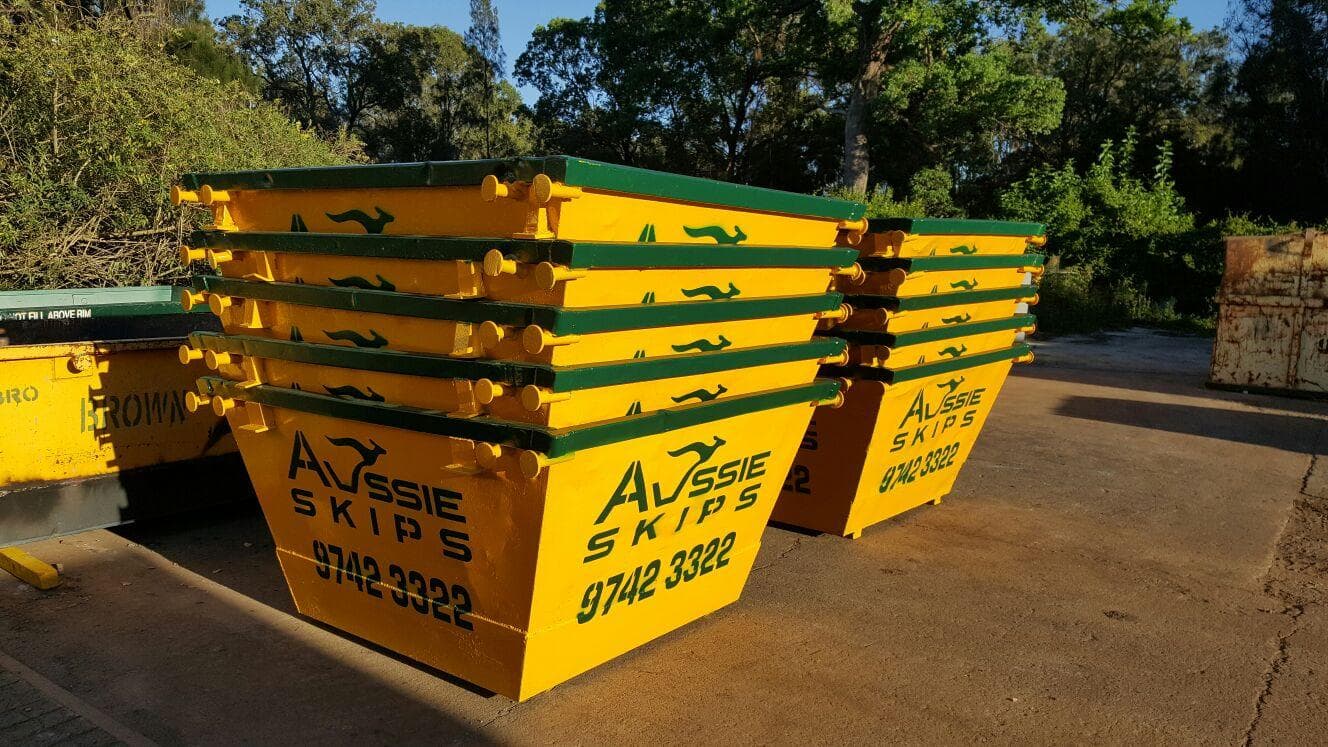
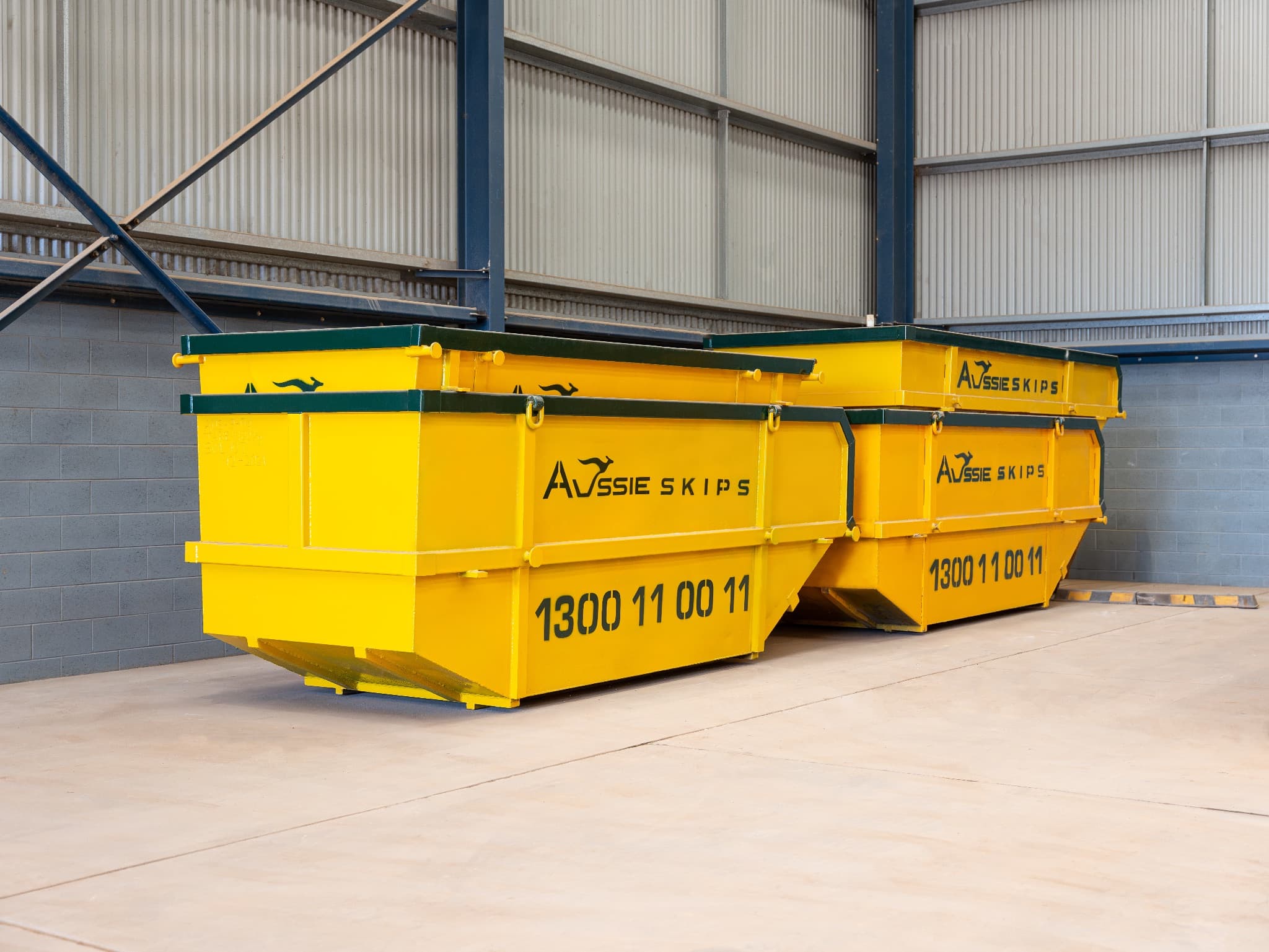
Our current online price for a 2 Marrel general waste bin is $510, plus a 4.8% fuel surcharge shown as its own line at checkout, which brings it to $534.48 (Aussie Skips October 2026 price guide).
Here's the skip bin hire cost in Sydney for every Marrel size, at our standard online prices for most of Greater Sydney, checked 8 October 2026:
Bin | Capacity | Max weight | Online price | With 4.8% fuel surcharge |
2 Marrel | 2.59 m³ | 1 tonne | $510 | $534.48 |
3 Marrel | 3.46 m³ | 2 tonnes | $600 | $628.80 |
4 Marrel | 4.61 m³ | 3 tonnes | $710 | $744.08 |
6 Marrel | 6.91 m³ | 3 tonnes | $920 | $964.16 |
10 Marrel | 10.56 m³ | 5 tonnes | $1,450 | $1,519.60 |
14 Marrel | 13.91 m³ | 6 tonnes | $1,810 | $1,896.88 |
Source: Aussie Skips October 2026 price guide. General waste, GST inclusive.
A handful of outer suburbs, including Palm Beach, Avalon, Dural, Kurrajong and Thirlmere, pay $30 to $50 more for general waste bins.
Not sure which bin fits the job? Our skip bin sizes guide shows dimensions, door access and what each size suits.
Side-by-Side: Skip Bin vs. Tip Run
Here's how the skip bin vs tip run Sydney comparison plays out as the trips add up. The worked example assumes a 40 km round trip in an average petrol car, the lowest published dry-waste minimum per load ($120.87), one extra hour of your time per trip and the 2 Marrel price above.
Tip Runs | Cash Cost (Gate Fee + Fuel) | Full Cost (Gate Fee + ATO Running Costs + 1 hour at minimum wage per trip) | 2 Marrel Skip Bin |
1 | $131.48 | $183.71 | $534.48 |
2 | $262.96 | $367.42 | $534.48 |
3 | $394.44 | $551.13 | $534.48 |
4 | $525.92 | $734.84 | $534.48 |
5 | $657.40 | $918.55 | $534.48 |
Sources: 2026 gate fee schedule (gate fee); ACCC and ABS (fuel); ATO (running costs, 2026-27 rate); Fair Work Ombudsman (minimum wage); Aussie Skips (bin price, October 2026).
On cash alone, four runs cost about the same as the bin and the fifth tips it over. Count what the car and your time are worth and the bin is cheaper from the third run.
Weight tells the same story: tipping a tonne of dry waste yourself costs at least $562.22 in gate fees before you've bought a litre of fuel, which is more than the 2 Marrel's all-in price for up to the same tonne.
Which Option Is Right for Your Job?
So, is skip bin hire worth it? Not always, and we'd rather you know that before you book.
When a skip bin clearly wins:
- Three or more trips. On the full-cost numbers above, that's where the bin pulls ahead.
- Heavy waste. Once a load passes the gate minimum you pay by the tonne, while a bin's price already includes its weight allowance.
- No ute or trailer. If you'd have to borrow or hire one, that's another cost on the DIY side.
- Reno or mixed waste over several days. A bin sits on site while you work, so you're not driving out every time the pile grows.
When a tip run might make sense
- One or two light loads. If you've got the vehicle for it, the numbers favour the DIY run.
- Bulky household items. Book your free council clean-up first (see the tip fees table). Just never put anything on the kerb without a booking: Canterbury-Bankstown warns that can bring fines of up to $4,000 (City of Canterbury Bankstown).
That's the honest skip bin vs tip run Sydney call: the right answer depends on your load.
Frequently Asked Questions
Do I need a council permit for a skip bin in Sydney?
Only if the bin sits on public land, such as the road or nature strip. Canterbury-Bankstown, for example, requires approval to place a skip bin in a public place under the Local Government Act 1993 (ABLIS), and permit fees vary from council to council.
How long can I keep a skip bin?
Online bookings include up to 7 days of hire, and a daily hire charge applies beyond that.
What happens if my skip bin goes over the weight limit?
Excess weight is charged at $330 including GST per tonne over the bin's maximum, and any bin found to contain engineered stone is charged at $350 plus GST per tonne.
Can I put concrete, bricks or soil in a skip bin?
Yes, in a bin booked for that material only: a 2 Marrel of clean concrete or bricks is $450 and a 2 Marrel of soil, dirt or clay is $830, before the fuel surcharge.
What can't go in a skip bin, and where does it go instead?
Batteries, chemicals, gas bottles, liquids and other hazardous waste can't go in a general bin, and asbestos needs its own bin, with bonded asbestos bins starting at $2,000 for a 2 Marrel. NSW households can drop paint, gas bottles and batteries at Community Recycling Centres free of charge, year round (NSW EPA).
What's the cheapest way to get rid of an old mattress?
Book it into your council clean-up if your council takes them, as Strathfield's does with up to two mattresses per collection (Strathfield Council). Dropping one at a major public drop-off centre costs $120.27, and adding one to an Aussie Skips bin is $250.
Can I pay for skip bin hire with Afterpay?
Yes. Our online checkout accepts Visa, Mastercard, Amex and Afterpay.
Where does the rubbish in an Aussie Skips bin end up?
It goes to our own recycling centres in Greenacre and Strathfield South (Aussie Skips 2026 cost guide), which operate under EPA Environment Protection Licences (EPLs) and sort material to maximise recycling (Aussie Recycling).
Bottom line: The skip bin vs tip run Sydney decision comes down to trips and weight. One or two light loads, grab the keys. Three or more, or anything heavy, and a bin is the better buy.
How to Book a Skip Bin in Sydney
You can book a skip bin online in about three minutes and here's how it works:
- Enter your postcode and the type of waste.
- Choose your delivery and pickup dates.
- Pick your bin size.
- Add any special items, such as mattresses, tyres or tree stumps over 50 cm.
- Tell us where the bin goes: front or back yard, driveway, nature strip or a non-metered spot on a public road.
Book before 10am on a weekday or 9am on a Saturday and same-day delivery is available; we don't deliver on Sundays (Aussie Skips October 2026 price guide).
Rather talk it through? Call our Sydney team on 1300 11 00 11.